
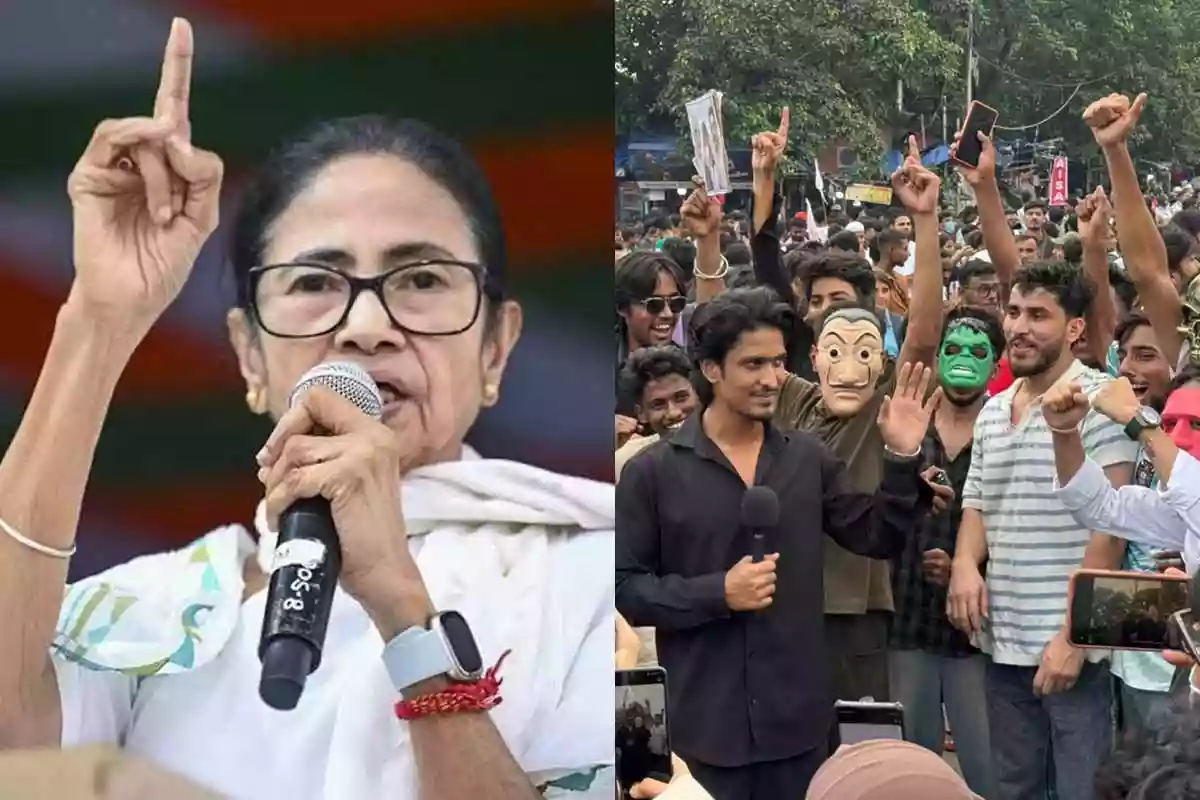
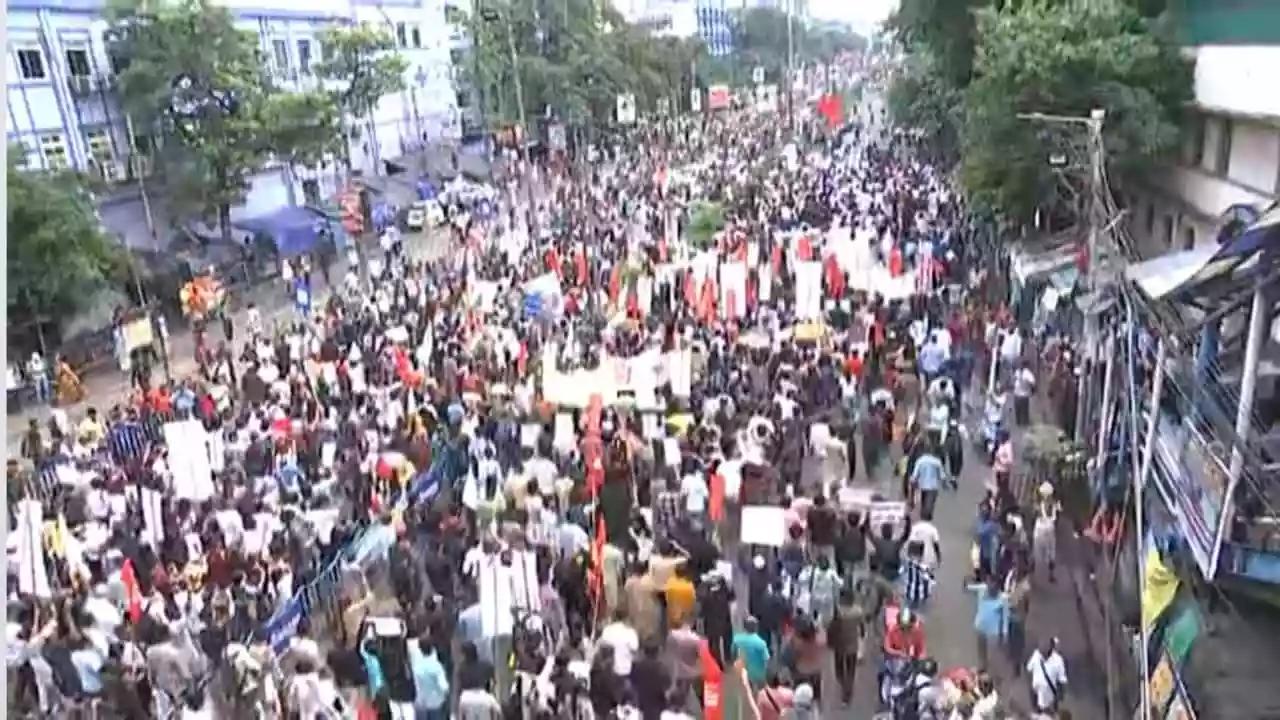
Police lathi-charge as protesters hurl shoes and bottles; Esplanade turns into battlefield
.gif)

Download Mobile App 







The Union government is reportedly reassessing its strategy to secure parliamentary approval for the proposed Delimitation Bill as changes within the opposition camp alter the political landscape. The legislation, which requires a constitutional amendment, needs a two-thirds majority of members present and voting in both Houses of Parliament under Article 368 of the Constitution.
The bill had earlier faced resistance when it was introduced alongside the Women’s Reservation Constitutional Amendment Bill in April. At that time, opposition parties were largely united in opposing the proposal. Recent political developments, however, have prompted renewed discussion over the government’s ability to gather the required support for the measure.
A significant part of the political focus has shifted to the All India Trinamool Congress. Following its loss of power in West Bengal, the party has faced internal dissent and organisational challenges. According to political developments in the state, a section of legislators has backed rebel leader Ritabrata Banerjee, who has emerged as Leader of the Opposition in the Assembly. Attention has also turned to the party’s parliamentary strength, which currently stands at 41 MPs, including 28 members in the Lok Sabha and 13 in the Rajya Sabha.
Developments in Tamil Nadu have also drawn attention. Relations between the Dravida Munnetra Kazhagam and the Indian National Congress have reportedly come under strain following recent political disagreements. The DMK has announced that it will not participate in a high-level INDIA bloc meeting, although it has stated that cooperation on selected national issues will continue. The party currently has 32 MPs, comprising 22 Lok Sabha members and 10 Rajya Sabha members.
The BJP-led National Democratic Alliance has also seen changes in parliamentary arithmetic following political realignments involving former AAP MPs. Reports indicate that the ruling alliance is examining options to strengthen support in the Rajya Sabha while engaging with regional parties and independent groups on specific legislative issues.
The proposed Delimitation Bill would redraw parliamentary constituencies across the country. Under the proposal discussed in political circles, the strength of the Lok Sabha could increase from 543 seats to around 850 seats, including approximately 816 seats allocated to states. The proposal has become linked to broader discussions on electoral and constitutional reforms.
Political discussions have also focused on the possibility that abstentions or walkouts by opposition parties could affect the effective voting strength during a constitutional amendment vote. As upcoming parliamentary sessions approach, attention remains on whether changing political alignments and legislative calculations will influence the bill’s prospects in Parliament.





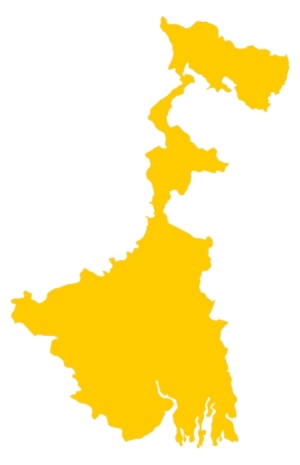 West Bengal
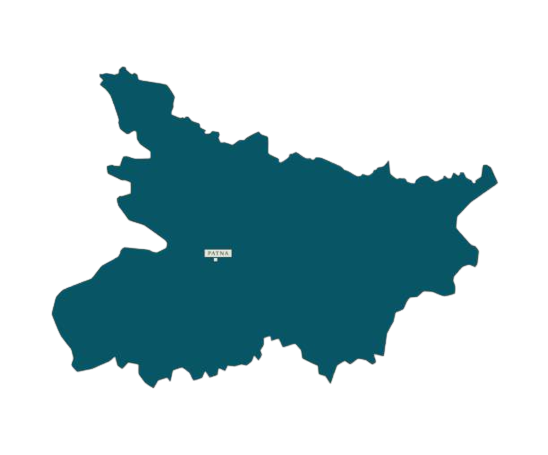 Bihar
Bihar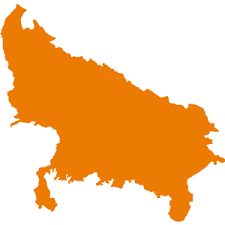 Uttar Pradesh
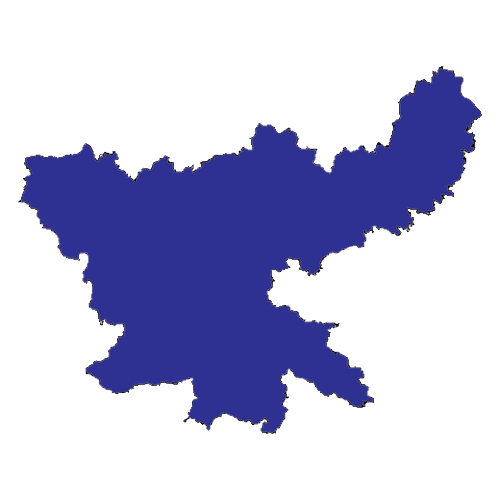 Jharkhand